
 محتوى مموّل
Ads
استخدام lovable unlimited بدون حدود
أعرف المزيد
محتوى مموّل
Ads
استخدام lovable unlimited بدون حدود
أعرف المزيد
JOURNAL INDEX

What's New in PHP 8.6
عبدالرحمن ربيع
Software Engineer & AI Builder
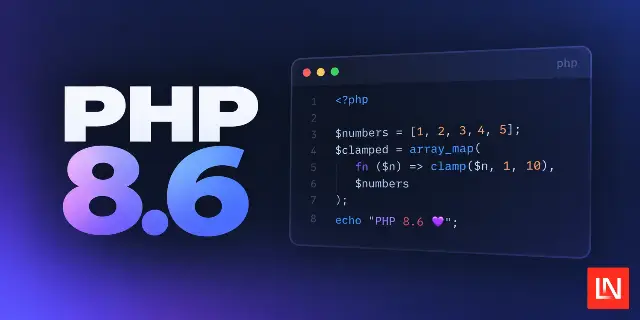
PHP 8.6 arrives November 19, 2026 with partial function application, a clamp() function, a Duration class, readonly property defaults, and new deprecations.
إعلان
فيديو
استخدام lovable unlimited بدون حدود
أعرف المزيدThe next annual PHP release is approaching: PHP 8.6 is scheduled for November 19, 2026. Currently in beta, this version reaches its feature freeze on September 22, followed by the first release candidate two days later.
Release Timeline
The PHP 8.6 preparation page outlines this release schedule:
Alpha 1–Alpha 3: July 2–July 30, 2026
Beta 1, marking the soft feature freeze: August 13, 2026
Beta 3 release: September 10, 2026
Feature freeze date: September 22, 2026
- RC 1: September 24, 2026
- RC 4: November 5, 2026
- GA: November 19, 2026
Daniel Scherzer, Matteo Beccati, and Joe Ferguson are managing the release.
Applying Functions Partially
Partial function application (PFA) lets you call a function with some arguments filled in and get back a closure that takes the rest. The ? placeholder marks a single argument to fill later, and ... stands in for all remaining arguments:
$makeSlug =str_replace(' ', '-', ?);
$makeSlug('Hello World'); // Hello-World
$titles =array_map(strtolower(?), $titles);
The resulting closure keeps the parameter names, types, and defaults of the original function. Arguments you supply are evaluated when the partial is created, not when it is called. A settled that every ? placeholder becomes a required parameter on the closure, even if the original parameter was optional.
Although the initial proposal was rejected in 2021, the v2 RFC received unanimous approval with a vote of 33 to 0.
The clamp() Function
The new function returns the value if it falls within the bounds, or the nearest bound if it does not:
clamp(10, min: 0, max: 100); // 10clamp(101, min: 0, max: 100); // 100clamp(-1, min: 0, max: 100); // 0It works with any comparable type, including strings and DateTime objects. Passing a $min greater than $max throws a ValueError. This replaces the common min(max($value, $min), $max) pattern, which is easy to get backwards.
A Duration Class
PHP 8.6 adds Time\Duration, a final readonly class that represents a stopwatch-style length of time with nanosecond precision. It has factory methods for each unit, arithmetic methods, and comparison support:

useTime\Duration;
$oneSecond =Duration::fromSeconds(1);$halfSecond = $oneSecond->divideBy(2);$total = $oneSecond->add($halfSecond);
$delay =Duration::fromMilliseconds(100)->multiplyBy(2** $attempt);
$total > $delay; // comparison operators work
An ISO 8601 duration string can also be used to create a duration. Designed as a common type, the class lets core functions and the new polling API accept durations in place of standalone integers and floats. The complete list of methods is available in the Duration RFC.
Default Values for Readonly Properties
PHP 8.6 introduces support for default values on readonly properties. Earlier versions raised a compile-time error for these defaults, making it cumbersome to use a fixed value to satisfy the get-only interface properties introduced in PHP 8.4:
finalreadonlyclassCreateBooksTableimplementsMigration{publicstring $name ='2026_01_01_create_books_table';}The RFC lifts the restriction without altering readonly behavior: once initialized, the property cannot be assigned a new value.
Function Parameter Support for DocComments
Doc comments can now sit directly on a parameter, and ReflectionParameter::getDocComment() returns them. This avoids repeating the parameter name in a @param tag above the function:
functionsearch(/** Terms to search for in the database */string $query,/** Maximum number of entries to return */int $limit =10,):array {// ...}IDEs and static analyzers can access DocComments directly on individual parameters. Further details are available in the parameter DocComments RFC.
A Polling API
The new Io\Poll namespace gives PHP a unified interface to platform polling mechanisms: epoll on Linux, kqueue on BSD and macOS, event ports on Solaris, and WSAPoll on Windows. It replaces stream_select() for anyone building event loops or async runtimes in userland:
useIo\Poll\{Context, Event, StreamPollHandle};
$poll =newContext();$server =stream_socket_server('tcp://0.0.0.0:8080');stream_set_blocking($server, false);
$poll->add(newStreamPollHandle($server), [Event::Read], ['type'=>'server']);
while (true) {foreach ($poll->wait(1) as $watcher) {if ($watcher->hasTriggered(Event::Read)) {// accept the connection } }}According to the RFC, the primary goal is to support internal needs, including signal handling and FPM improvements. Userland async frameworks are a secondary target. Consult the Polling API RFC for details.
SortDirection Enum
A global SortDirection enum with Ascending and Descending cases is now built in. Nothing in core accepts it yet. The proposes it as a shared type so libraries stop defining their own, with query builders given as the example:
$query->orderBy('created_at', SortDirection::Descending);Support for __debugInfo() in Enums
Enums were not allowed to define most magic methods when they shipped in 8.1. PHP 8.6 lifts that restriction for __debugInfo(), since it needs no state, so var_dump() output can be customized:
enumStatus: int{caseOk=200;
publicfunction__debugInfo():array {return [__CLASS__.'::'.$this->name .' = '.$this->value]; }}Stream Error Handling
Streams get a unified error model. A new error_mode context option chooses between the current warnings, exceptions, or silence, and stream_last_errors() returns structured StreamError objects for the last operation:
$context =stream_context_create(['stream'=> ['error_mode'=>StreamErrorMode::Exception],]);
try {    $stream =fopen('/nonexistent/file.txt', 'r', false, $context);} catch (StreamException $e) {foreach ($e->getErrors() as $error) {echo $error->code->name .': '. $error->message;    }}
The defines more than 50 semantic error codes in a StreamErrorCode enum.
URI Extension Follow-ups
Builder classes are being added to the URI extension introduced in PHP 8.5, allowing you to construct a URI without generating intermediate objects for every component:
$uri =newUri\Rfc3986\UriBuilder()->setScheme('https')->setHost('example.com')->setPath('/foo/bar')->build();The also adds getUriType() and getHostType() methods, plus percent-encoding functions for individual URI components.
Secure Session Defaults
Three php.ini session defaults change for new installations:
| Setting | Old default | New default |
|---|---|---|
session.use_strict_mode |
0 |
1 |
session.cookie_httponly |
0 |
1 |
session.cookie_samesite |
unset | Lax |
Because Laravel handles its own session cookies, most applications are not affected. Applications using native PHP sessions that depend on the previous defaults should review the session defaults RFC.
Learn More
- Preparation Checklist and Schedule for PHP 8.6
- PHP RFC index containing the complete list of RFCs implemented in 8.6
The next annual PHP release is approaching: PHP 8.6 is scheduled for November 19, 2026. Currently in beta, this version reaches its feature freeze on September 22, followed by the first release candidate two days later.
Release Timeline
The PHP 8.6 preparation page outlines this release schedule:
Alpha 1–Alpha 3: July 2–July 30, 2026
Beta 1, marking the soft feature freeze: August 13, 2026
Beta 3 release: September 10, 2026
Feature freeze date: September 22, 2026
- RC 1: September 24, 2026
- RC 4: November 5, 2026
- GA: November 19, 2026
Daniel Scherzer, Matteo Beccati, and Joe Ferguson are managing the release.
Applying Functions Partially
Partial function application (PFA) lets you call a function with some arguments filled in and get back a closure that takes the rest. The ? placeholder marks a single argument to fill later, and ... stands in for all remaining arguments:
$makeSlug =str_replace(' ', '-', ?);
$makeSlug('Hello World'); // Hello-World
$titles =array_map(strtolower(?), $titles);
The resulting closure keeps the parameter names, types, and defaults of the original function. Arguments you supply are evaluated when the partial is created, not when it is called. A settled that every ? placeholder becomes a required parameter on the closure, even if the original parameter was optional.
Although the initial proposal was rejected in 2021, the v2 RFC received unanimous approval with a vote of 33 to 0.
The clamp() Function
The new function returns the value if it falls within the bounds, or the nearest bound if it does not:
clamp(10, min: 0, max: 100); // 10clamp(101, min: 0, max: 100); // 100clamp(-1, min: 0, max: 100); // 0It works with any comparable type, including strings and DateTime objects. Passing a $min greater than $max throws a ValueError. This replaces the common min(max($value, $min), $max) pattern, which is easy to get backwards.
A Duration Class
PHP 8.6 adds Time\Duration, a final readonly class that represents a stopwatch-style length of time with nanosecond precision. It has factory methods for each unit, arithmetic methods, and comparison support:
useTime\Duration;
$oneSecond =Duration::fromSeconds(1);$halfSecond = $oneSecond->divideBy(2);$total = $oneSecond->add($halfSecond);
$delay =Duration::fromMilliseconds(100)->multiplyBy(2** $attempt);
$total > $delay; // comparison operators work
An ISO 8601 duration string can also be used to create a duration. Designed as a common type, the class lets core functions and the new polling API accept durations in place of standalone integers and floats. The complete list of methods is available in the Duration RFC.
Default Values for Readonly Properties
PHP 8.6 introduces support for default values on readonly properties. Earlier versions raised a compile-time error for these defaults, making it cumbersome to use a fixed value to satisfy the get-only interface properties introduced in PHP 8.4:
finalreadonlyclassCreateBooksTableimplementsMigration{publicstring $name ='2026_01_01_create_books_table';}The RFC lifts the restriction without altering readonly behavior: once initialized, the property cannot be assigned a new value.
Function Parameter Support for DocComments
Doc comments can now sit directly on a parameter, and ReflectionParameter::getDocComment() returns them. This avoids repeating the parameter name in a @param tag above the function:
functionsearch(/** Terms to search for in the database */string $query,/** Maximum number of entries to return */int $limit =10,):array {// ...}IDEs and static analyzers can access DocComments directly on individual parameters. Further details are available in the parameter DocComments RFC.
A Polling API
The new Io\Poll namespace gives PHP a unified interface to platform polling mechanisms: epoll on Linux, kqueue on BSD and macOS, event ports on Solaris, and WSAPoll on Windows. It replaces stream_select() for anyone building event loops or async runtimes in userland:
useIo\Poll\{Context, Event, StreamPollHandle};
$poll =newContext();$server =stream_socket_server('tcp://0.0.0.0:8080');stream_set_blocking($server, false);
$poll->add(newStreamPollHandle($server), [Event::Read], ['type'=>'server']);
while (true) {foreach ($poll->wait(1) as $watcher) {if ($watcher->hasTriggered(Event::Read)) {// accept the connection } }}According to the RFC, the primary goal is to support internal needs, including signal handling and FPM improvements. Userland async frameworks are a secondary target. Consult the Polling API RFC for details.
SortDirection Enum
A global SortDirection enum with Ascending and Descending cases is now built in. Nothing in core accepts it yet. The proposes it as a shared type so libraries stop defining their own, with query builders given as the example:
$query->orderBy('created_at', SortDirection::Descending);Support for __debugInfo() in Enums
Enums were not allowed to define most magic methods when they shipped in 8.1. PHP 8.6 lifts that restriction for __debugInfo(), since it needs no state, so var_dump() output can be customized:
enumStatus: int{caseOk=200;
publicfunction__debugInfo():array {return [__CLASS__.'::'.$this->name .' = '.$this->value]; }}Stream Error Handling
Streams get a unified error model. A new error_mode context option chooses between the current warnings, exceptions, or silence, and stream_last_errors() returns structured StreamError objects for the last operation:
$context =stream_context_create(['stream'=> ['error_mode'=>StreamErrorMode::Exception],]);
try {    $stream =fopen('/nonexistent/file.txt', 'r', false, $context);} catch (StreamException $e) {foreach ($e->getErrors() as $error) {echo $error->code->name .': '. $error->message;    }}
The defines more than 50 semantic error codes in a StreamErrorCode enum.
URI Extension Follow-ups
Builder classes are being added to the URI extension introduced in PHP 8.5, allowing you to construct a URI without generating intermediate objects for every component:
$uri =newUri\Rfc3986\UriBuilder()->setScheme('https')->setHost('example.com')->setPath('/foo/bar')->build();The also adds getUriType() and getHostType() methods, plus percent-encoding functions for individual URI components.
Secure Session Defaults
Three php.ini session defaults change for new installations:
| Setting | Old default | New default |
|---|---|---|
session.use_strict_mode |
0 |
1 |
session.cookie_httponly |
0 |
1 |
session.cookie_samesite |
unset | Lax |
Because Laravel handles its own session cookies, most applications are not affected. Applications using native PHP sessions that depend on the previous defaults should review the session defaults RFC.
Learn More
- Preparation Checklist and Schedule for PHP 8.6
- PHP RFC index containing the complete list of RFCs implemented in 8.6
كتبه
عبدالرحمن ربيع
Software Engineer & AI Builder
مطور برمجيات متكامل ومصمم جرافيك مع أكثر من 4 سنوات خبرة في بناء تطبيقات الويب الحديثة باستخدام PHP و JavaScript و HTML و CSS. خلفية قوية في تصميم UI/UX واستخدام متقدم لأدوات الذكاء الاصطناعي لتعزيز كفاءة التطوير والأتمتة واتخاذ القرارات. حاصل على ماجستير تنفي...
RELATED / READ NEXT
كل المقالات
مقالات ذات صلة
2026.09.18 · 59 VIEWS
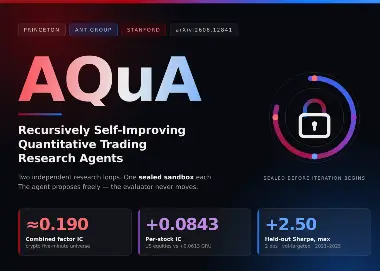
باحثون من برينستون وآنت جروب وستانفورد يقدمون AQuA: إطار عمل وكيل من جزأين لاكتشاف العوامل المستقلة وتطوير النماذج في التمويل الكمي
اقرأ المقال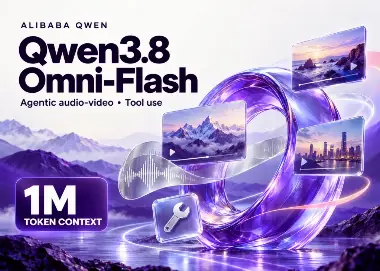
2026.09.18 · 69 VIEWS
Alibaba Qwen Releases Qwen3.8-Omni-Flash: A 1M-Context Omni-Modal Model Built Around Agentic Audio-Video Understanding and Tool Use
اقرأ المقال
2026.09.18 · 4 VIEWS
Best Open-Source Agent Harnesses for Local LLMs in 2026
اقرأ المقال
2026.09.18 · 8 VIEWS
التعليقات (0)
كن أول من يعلّق على هذا المقال.